
To run a bottle drive in Calgary, set a dollar goal, choose a date about three weeks away, decide how the empties will reach the depot, and announce it twice. Most of the work happens in the first week of planning, so the drive itself is one busy day or a short window of pickups.
This guide walks through each step for schools, sports teams, clubs and community groups, including the goal maths, three ways to collect, ready-to-copy announcements, and how to report the total so people give again next time.
Start with a goal you can explain
A goal gives people something to aim at, and a goal with working behind it is one your parent council or coach will believe. The sum is simple: households who give, times containers each, times 10 cents. Almost everything a household drinks comes in containers of 1 litre or less, which refund 10 cents. Big jugs and 2 litre bottles refund 25 cents, so treat them as a bonus.
| Step | Working | Result |
|---|---|---|
| Households who give | Estimate: 60 families and neighbours | 60 |
| Containers per household | Estimate: about a month of empties for a household of three | about 100 |
| Refund per household | 100 containers at 10 cents | $10 |
| Drive total | 60 households at $10 | about $600 |
Where does 100 a month come from? The Beverage Container Management Board puts the average at about 450 containers returned per Albertan per year. A household of three is about 1,350 a year, or roughly 112 a month. Rounding down keeps your goal honest. For bigger groups and year-round collection, see how much a bottle drive can raise.
The 3 week plan
| When | What to do |
|---|---|
| Week 1: plan | Get the okay from your principal, coach or board. Set the goal and the date. Pick a format. Name a lead adult and a treasurer. |
| Week 2: tell people | Send the newsletter note and the Facebook post. Recruit volunteers and give each one a job. Line up vehicles or a drop-off spot. Ask families to start saving now and to check the garage. |
| Week 3: collect | Send a short reminder three days before. Run the drive. Sort, load and get everything counted. |
| The week after | Share the total, thank everyone by name where you can, and file the count sheet. |
Three weeks is long enough for people to save a real amount and short enough that they don't forget. A drive announced the night before mostly collects whatever is in the recycling bin that day.
Pick your format
There are three common ways to run a drive. Each one moves the same empties; the difference is who does the hauling.
| Format | Best for | The catch |
|---|---|---|
| Door to door with volunteers | Tight neighbourhoods, teams with lots of parents | Needs drivers, vans and a full day of adult time |
| Drop-off point at a school or hall | Schools and community associations with a parking lot | Supporters still have to load their car, and someone has to staff the site |
| Doorstep pickup tagged to your drive | Busy families, supporters spread across the city | Supporters need to book a pickup instead of just leaving bags out |
Door to door with volunteers
Volunteers walk or drive set streets, collect bags left on steps, and bring everything back to a central spot for sorting. It works well when you flyer those streets a week ahead with the date and a time to have bags out. Plan the routes on a map so no street gets missed or done twice.
A drop-off point
Supporters bring their empties to a school parking lot or community hall during set hours. Volunteers unload cars, sort and fill vehicles for the depot. Get written permission for the space, have tarps for the ground, and plan for more glass than you expect.
Doorstep pickup tagged to your drive
This is how The Empties Guy runs drives. You register the drive and get a shareable page with a live progress bar. Supporters book a pickup tagged to your drive, leave their bags out, and we collect from their door, count at the depot, and every counted refund goes to your group with a count sheet your treasurer can file. There is no pickup fee, and no e-transfer fee when the refund goes to a drive. Set one up on the bottle drives page.
Copy and paste announcements
Fill in the parts in brackets and send. Keep it short: what, why, when and how.
Post the Facebook version again three days before the drive, with a progress update if you have one. A number like "we're at $320 of $600" gets more response than a plain reminder.
Volunteer roles and safety
- Lead: owns the plan, the permissions and the timeline.
- Treasurer: receives the refund, keeps the count sheets, reports the total.
- Drivers: adults with vehicles who can lift full bags.
- Sorters: separate glass, cans, plastic and cartons, and pull out anything that won't refund.
- Runners: kids are great here, always paired with an adult.
- Kids stay with adults. Children work in pairs alongside an adult, on sidewalks, in daylight.
- Nobody goes inside a home. Collect from the step, the driveway or the garage door only.
- Gloves and closed shoes for everyone. Bags can hold broken glass and sharp can edges.
- Glass goes in sturdy boxes. Never in a bag a child carries.
- Watch the traffic. Bright vests near roads, and no one walking behind a reversing vehicle.
- Lift smart. Half-full bags are easier and safer than overstuffed ones. Bring water and take breaks.
Sorting and transport if you go to the depot
If your group hauls the empties itself, a little sorting on site saves a lot of time at the counter.
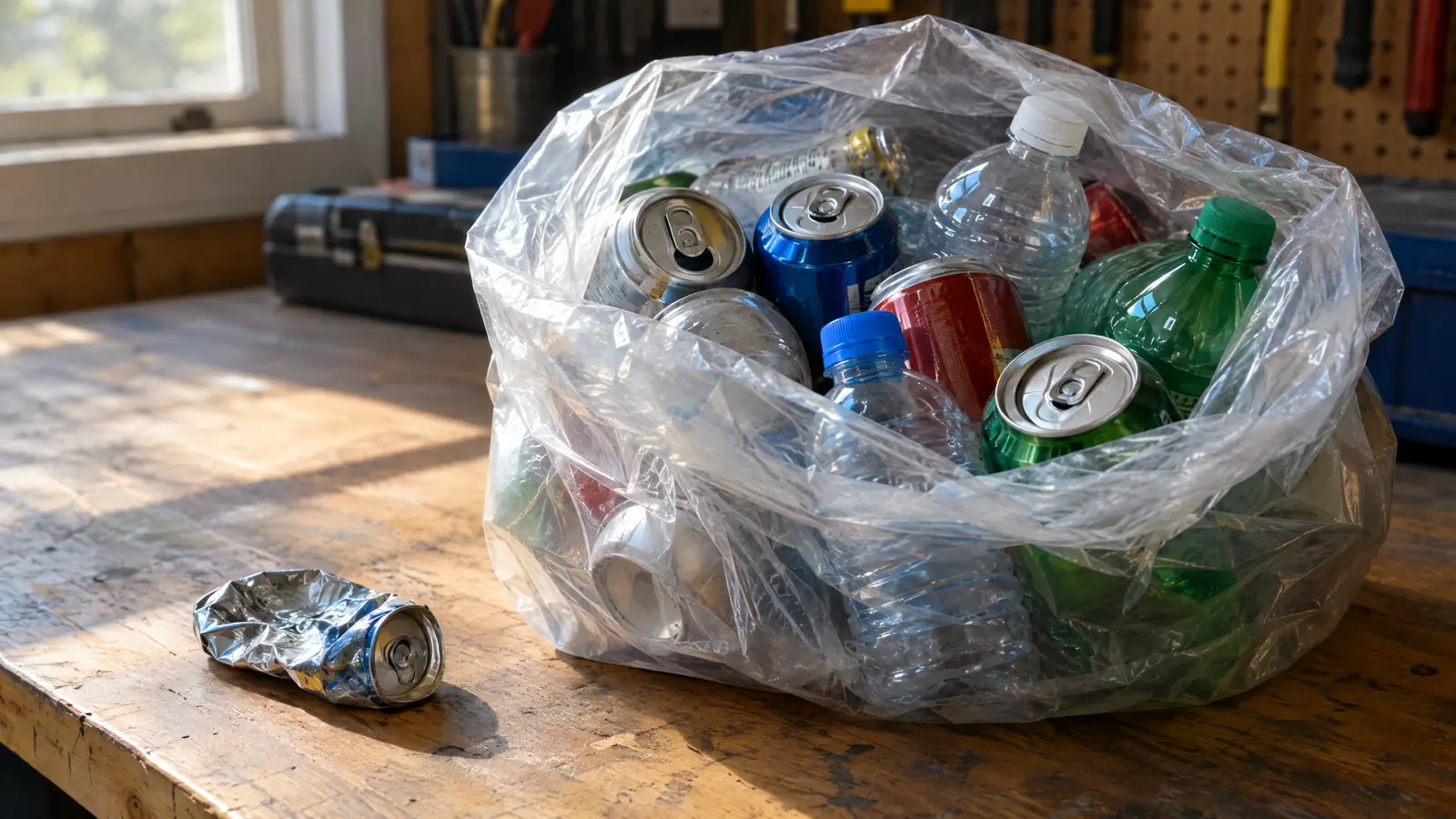
- Caps and labels stay on. Depots don't need them removed, and the label helps identify the container.
- Don't crush anything. Depot machines count by shape.
- Pour out leftovers. Sticky, half-full bags are messy to handle and unpleasant in a van.
- Set aside out-of-province containers. Alberta depots are not allowed to refund containers bought outside Alberta.
- Pull out what isn't refundable. Soup and broth cans, yogurt tubs and cooking oil bottles go in your recycling, not the depot load. See what isn't refundable.
- Call the depot ahead. Ask when a big load is easiest for them and whether they want it sorted a particular way.
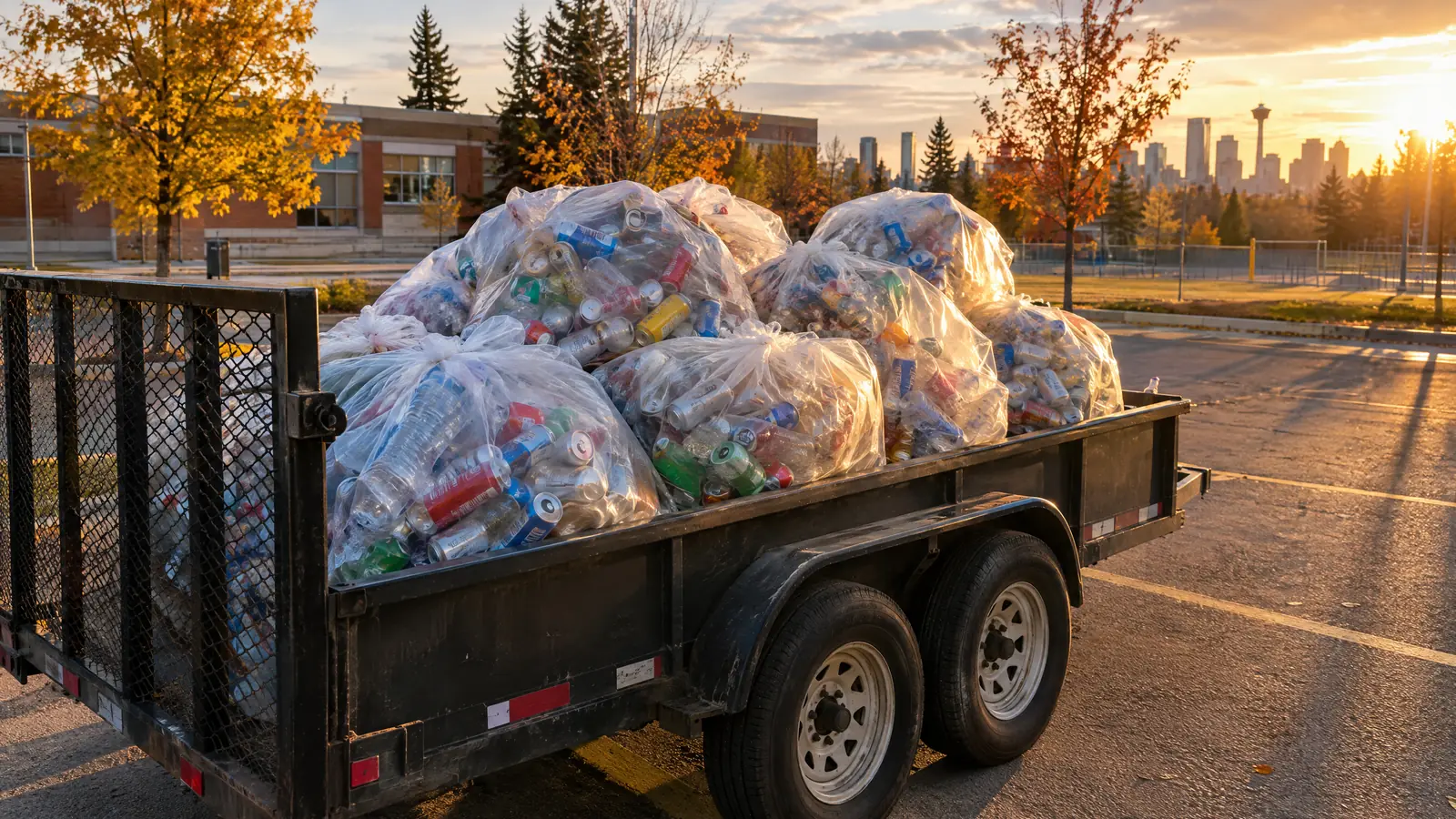
Line vehicles with tarps, keep glass boxes on the floor where they can't tip, and don't overload a trailer. More detail on preparing empties is in caps on or off, crushed or not.
Count it and report back
Keep a count sheet for every load: the date, how many containers at 10 cents, how many at 25 cents, and the refund. It answers the question every parent asks, and it gives your treasurer a record to file.
| Load | Small | Large | Refund |
|---|---|---|---|
| Load 1 | 1,400 at 10 cents | 90 at 25 cents | $162.50 |
| Load 2 | 1,000 at 10 cents | 90 at 25 cents | $122.50 |
| Total | 2,400 | 180 | $285.00 |
Check the maths before you send it: 2,400 at 10 cents is $240, plus 180 at 25 cents is $45, for $285. Then send a short thank-you within a week with the total, what it will pay for, and a photo of the group if you have permission. People who see the result are the ones who save for next time.
When to hold it
There is no perfect date, but a little reasoning helps you pick a good one.
- After the holidays. Parties and family visits leave garages full of empties in early January.
- The week after a long weekend. Barbecues and gatherings mean more cans, and people are home to sort them.
- After Stampede, not during it. Plenty of empties pile up, but volunteers and supporters are busy that week.
- Spring cleanup. When people clear out garages, the bags they have been ignoring all winter come out.
- Avoid clashes. Check the school calendar and other local fundraisers so you are not the third ask that week.
Check the rules before you start
Ask your principal, parent council, league or community association whether fundraisers need approval and how the money should be handled. Schools and associations often have their own guidelines for where students can go, who handles cash, and how funds are recorded. If you use a parking lot or hall, get the owner's permission in writing. It takes one email and saves a lot of trouble.
Quick answers
How long should a bottle drive run?
About three weeks from announcement to collection works well: long enough for people to save a real amount, short enough that they remember. A doorstep pickup drive can stay open longer, since supporters book when their bags are full.
Can kids collect bottles door to door?
Yes, with care. Children should work in pairs with an adult, stay on sidewalks in daylight, wear gloves, leave glass to adults, and never go inside anyone's home.
Do bottles need to be sorted for a bottle drive?
Sorting is optional at Alberta depots, but separating glass, cans, plastic and cartons speeds up the count. Keep caps on, don't crush, and set aside anything bought outside Alberta.
Can a bottle drive collect containers from BC or Saskatchewan?
Alberta depots are not allowed to refund containers bought outside Alberta, so keep them out of your drive and return them in the province they came from.
What does a drive with The Empties Guy cost the group?
There is no pickup fee, and no e-transfer fee when the refund goes to a drive. Every counted refund goes to your group, with a count sheet.
Sources
Refund amounts and depot rules come from the bodies that set them. Check the source if a number matters to you.