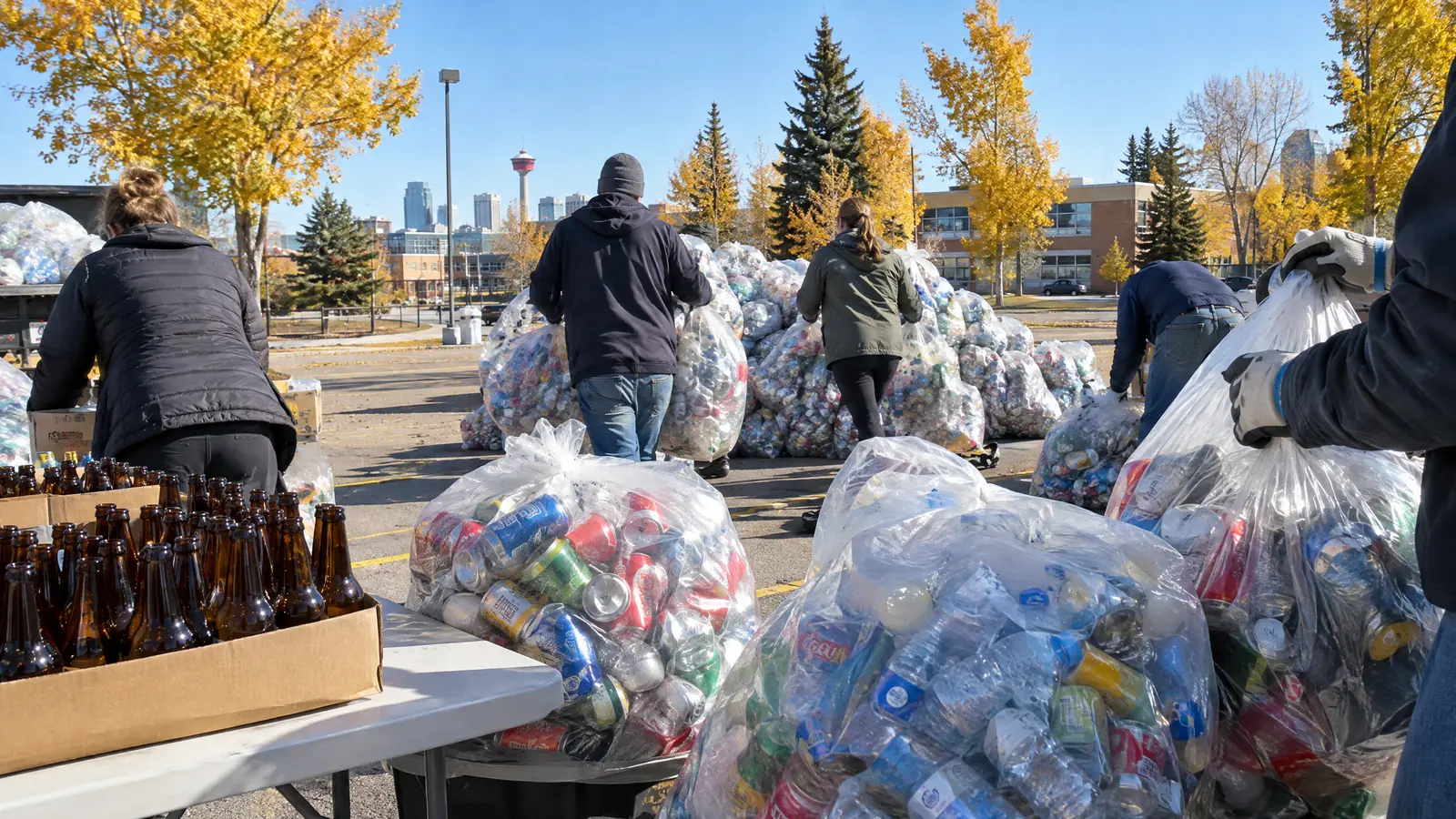
On realistic assumptions, a small team that reaches 40 households once raises about $450, and a school of 300 families with decent turnout can raise $2,000 or more. A steady year-round collection from 20 households can bring in around $2,700 a year.
Every one of those figures comes from the same sum: households who give, times containers each, times 10 cents. Below is the working, so you can swap in your own numbers and set a goal you can actually hit.
Start with one household
The Beverage Container Management Board puts the average at about 450 containers returned per Albertan per year. That is the most useful number a bottle drive organiser can know, because it tells you what one household is likely to have.
| Household | Per year | Per month | Refund per month |
|---|---|---|---|
| 1 person | 450 | about 37 | about $3.75 |
| 2 people | 900 | 75 | $7.50 |
| 3 people | 1,350 | about 112 | about $11 |
| 4 people | 1,800 | 150 | $15 |
The working for a household of three: 450 times 3 is 1,350 containers a year. Divide by 12 and you get about 112 a month. At 10 cents each, that is about $11 a month. These are averages. Some homes drink far more, some barely any, and the table assumes everything refunds 10 cents, which undercounts homes that buy milk or juice in big jugs.
Three real scenarios
| Scenario | Working | Estimate |
|---|---|---|
| Small team, 40 households, once | 40 households x about 112 containers (a month's worth) = 4,480, at 10 cents | about $450 |
| School of 300 families, once | 1 in 3 families give = 100, x 224 containers (two months' worth) = 22,400, at 10 cents | about $2,240 |
| Year-round collection, 20 households | 20 households x 1,350 containers a year = 27,000, at 10 cents | about $2,700 a year |
The assumptions matter, so here they are. The team scenario assumes each household hands over about one month of empties. The school scenario assumes a third of families take part and each gives two months' worth, which is realistic when you announce early and ask people to check the garage. The year-round row assumes 20 supporter households give everything they drink, all year. Change any one of those and the total moves with it.
What moves the number
Reach beats effort
Doubling the households who give doubles the total. Squeezing a few more cans out of the same 40 homes barely moves it. Put your energy into getting the ask in front of more people: the school newsletter, a community Facebook group, the team's group chat, and the grandparents.
Ask for the backlog
Plenty of Calgary garages hold months of bags nobody got around to returning. A household of three with four months stored has roughly 450 containers, or about $45. Say it plainly in your announcement: "Bring everything in the garage, not just this week's."
Big jugs are worth 25 cents
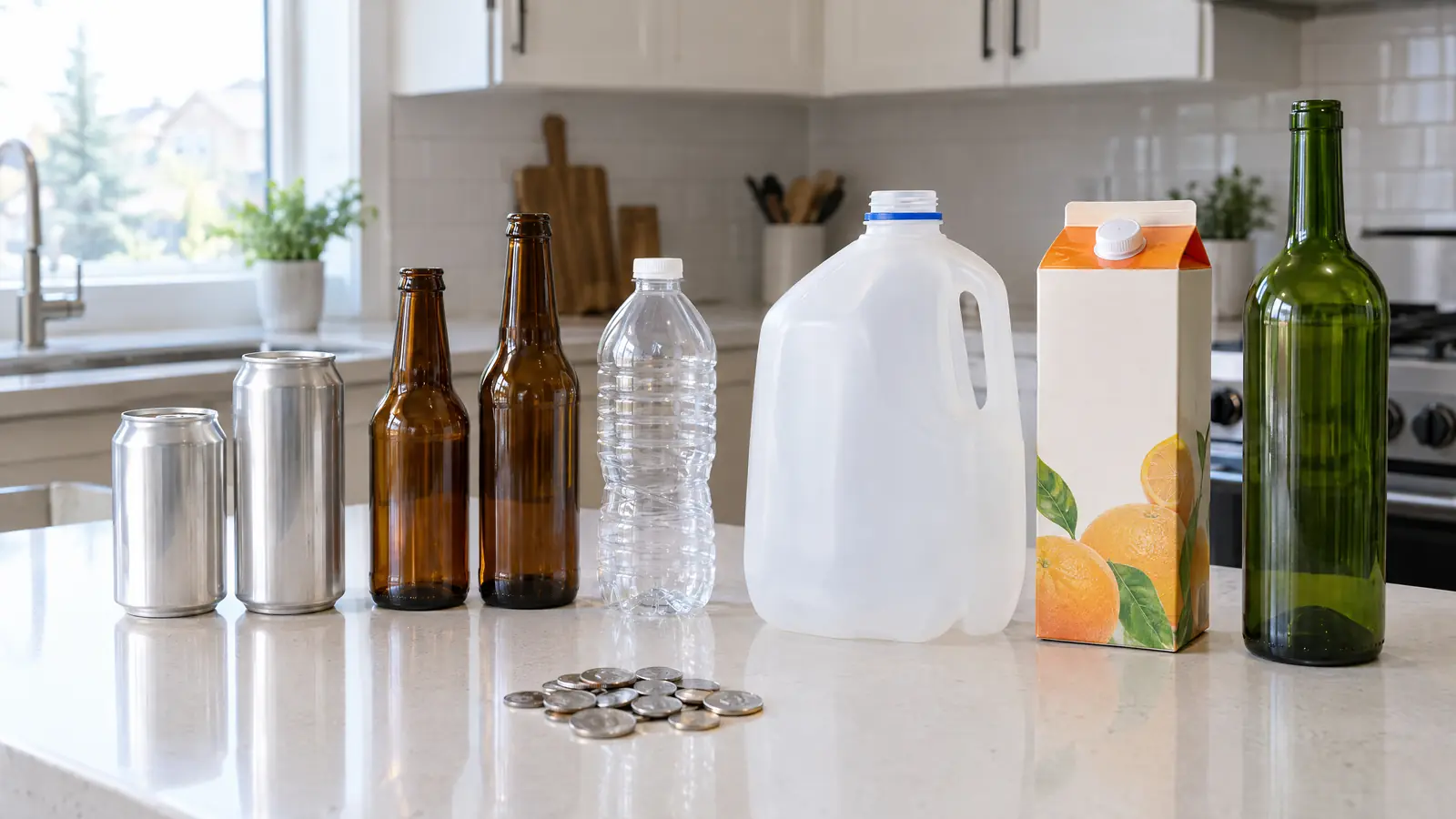
Anything over 1 litre refunds 25 cents: milk jugs, juice jugs, 2 litre pop bottles and big spirits bottles. If 1 in 10 of a household's 1,350 yearly containers is a large one, that is 135 at 25 cents ($33.75) plus 1,215 at 10 cents ($121.50), or $155.25 instead of $135. Remind people that milk jugs count.
Timing
A drive right after the holidays, after a long weekend or during spring cleanup catches people when their empties have piled up. A drive the same week as three other fundraisers catches them tired of being asked.
What won't count
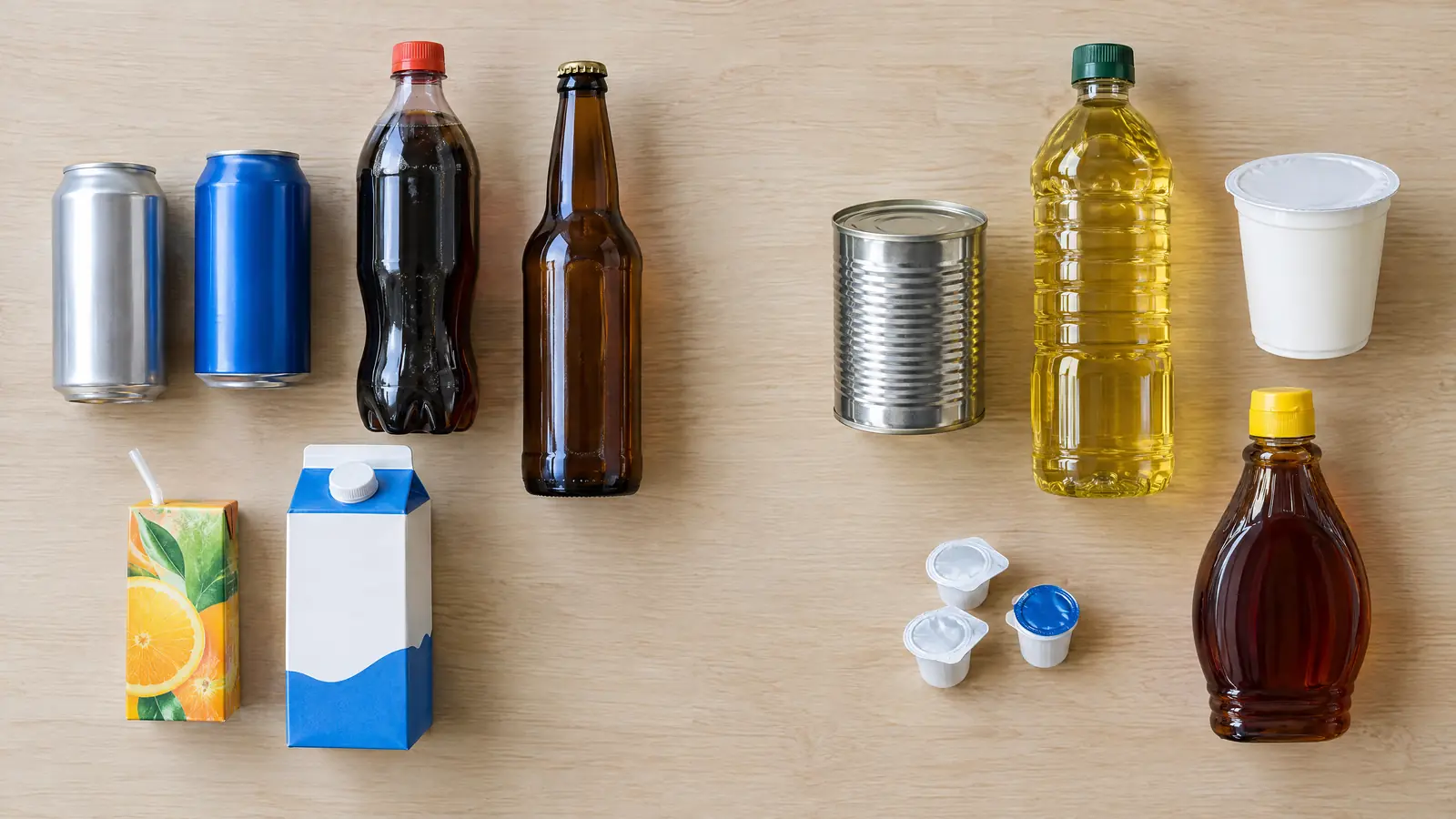
Containers bought outside Alberta, and food containers like soup cans and yogurt tubs, earn nothing. A drive that collects lots of them looks bigger than it pays. Mention it once in your announcement.
How easy it is to give
Every step you ask of a supporter loses a few of them. Loading the car, finding the drop-off, showing up during a two hour window on a Saturday: each one is a reason to say "next time". The drives that raise the most make giving as close to zero effort as possible, whether that is a volunteer at the curb or a pickup the supporter books from their phone.
Showing progress
People give more to a goal they can see moving. Post a running total halfway through, and again near the end. "We're at $1,400 of $2,000" gives fence-sitters a reason to dig out that last bag.
One-day drive or year-round collection?
| One-day drive | Year-round collection | |
|---|---|---|
| Total | A burst: about $450 to $2,240 in the examples above | Smaller amounts that add up: about $2,700 a year in the example |
| Volunteer time | One big day, plus planning | Little each week once it is set up |
| Best for | A specific goal: a trip, a tournament, new jerseys | Ongoing costs: equipment, field fees, a program |
| Risk | Bad weather or a clash can sink the day | Supporters drift off if nobody reminds them |
Many groups do both: a big drive to launch, then a standing ask so families keep saving for the team. Year-round works best when giving takes no effort, like a regular pickup the supporter books once and forgets about.
The costs nobody puts on the flyer
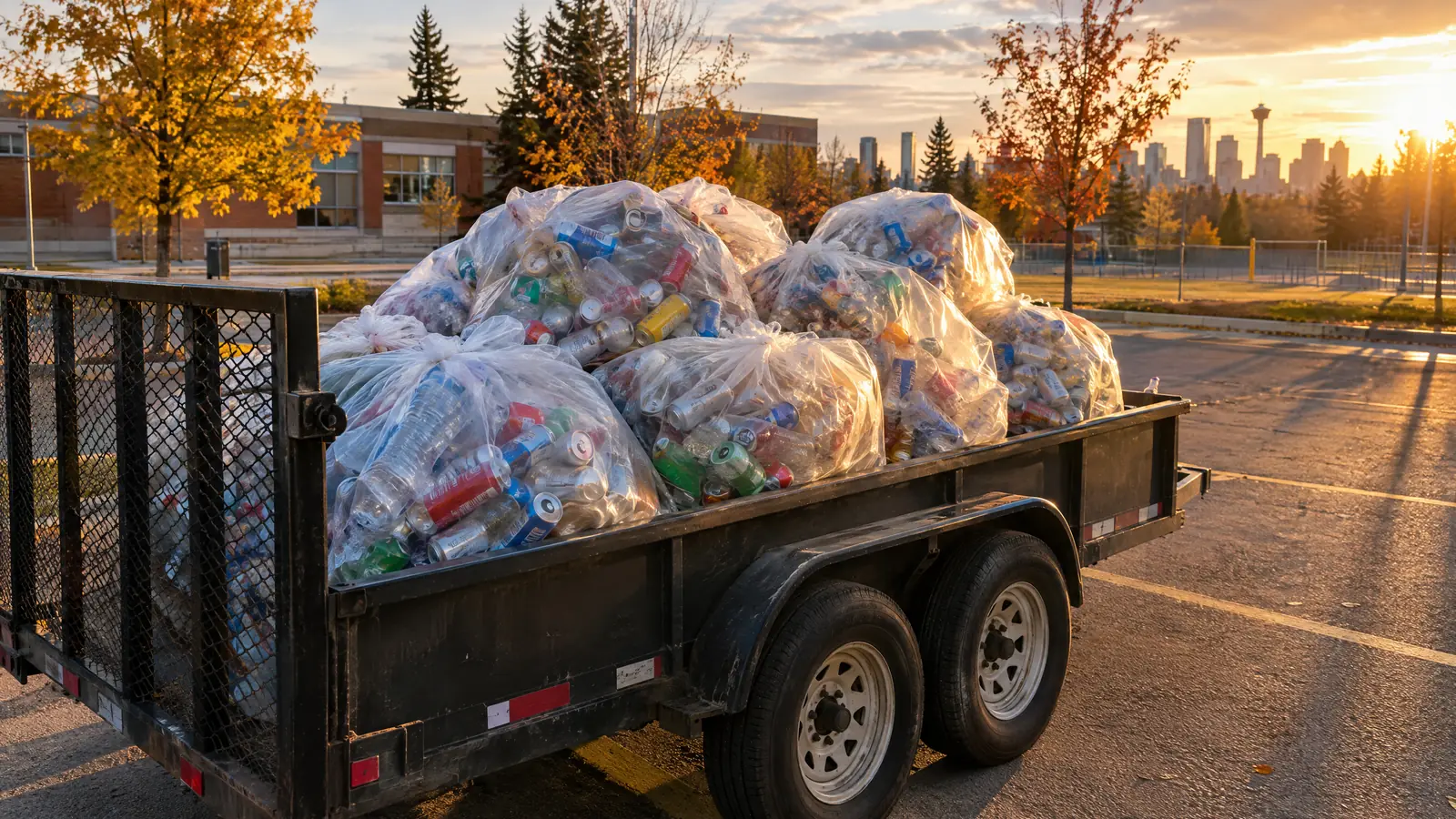
Depots pay the full refund on what they accept, but a drive your group hauls itself is not free. Fuel for every trip. A borrowed van or a rented trailer. Bags, gloves and tarps. Volunteer hours for collecting, sorting, loading and waiting at the counter. Getting rid of the things that don't refund. None of it shows in the total, but all of it comes out of somebody's pocket or weekend.
With doorstep pickup from The Empties Guy, supporters book a pickup tagged to your drive and we haul it: $0 pickup fees, and no e-transfer fee when the refund goes to a drive, so every counted refund reaches your group. If a supporter books a regular pickup and keeps their own refund instead, the usual fee applies: E-transfer fee of $1.50 deducted from refunds of $20.00 or less.
Set your goal in five minutes
Fill in the last column with your own numbers. The example is a school of 300 families.
| Step | Example | Yours |
|---|---|---|
| 1. Households you can reach | 300 | ______ |
| 2. Share likely to give (estimate) | 1 in 3 = 100 | ______ |
| 3. Containers per household | about 112 a month x 2 months saved = 224 | ______ |
| 4. Total containers (step 2 x step 3) | 100 x 224 = 22,400 | ______ |
| 5. Refund at 10 cents | 22,400 x 10 cents = $2,240 | ______ |
| 6. Minus your costs | fuel, rentals, supplies | ______ |
| 7. Your public goal (round down) | $2,000 | ______ |
Round down on purpose. Beating a goal in public feels good and brings people back next year. Missing an ambitious one, even by a little, reads as a flop. For the full week-by-week plan, see how to run a bottle drive in Calgary.
Quick answers
How much is a bag of bottles worth for a bottle drive?
A full garbage bag of mixed empties is often around $15 to $17. For example, 140 small containers at 10 cents plus 10 jugs at 25 cents is $16.50. A kitchen bag of cans is closer to $8.
How many bottles does it take to raise $1,000?
10,000 containers at 10 cents, or fewer if some are large ones at 25 cents. That is roughly 89 households each giving a month of empties (about 112 each for a household of three).
Is a one-day bottle drive or ongoing collection better?
A one-day drive raises more at once and suits a specific goal. Year-round collection raises less at a time but keeps going with little volunteer effort. Many groups do a launch drive, then keep a standing ask.
Do Alberta bottle depots take a cut from bottle drives?
No. Depots pay the full deposit on every container they accept. The costs of a drive are your own: fuel, vehicles, supplies and volunteer time.
Does the group pay anything with The Empties Guy?
No pickup fee, and no e-transfer fee when the refund goes to a drive. Every counted refund goes to your group, with a count sheet.
Sources
Refund amounts and depot rules come from the bodies that set them. Check the source if a number matters to you.